
Blog
What That Garage Door Noise Is Actually Telling You
Most Bowie houses date to the 1960s-70s boom, and original hardware tells on itself through sound. Here's what each noise means before it becomes a stuck door.
When to Call Someone
If the door bangs once and drops, or the cable has visibly frayed strands, stop using it and call. That's a spring or cable failure, not a lubrication problem, and a door under spring tension that lets go can put someone in the hospital. Same goes for a grinding sound that gets worse with each cycle rather than staying steady - that's usually a bearing or roller giving up, and running it to failure often takes the track mounting with it.
We can't always get to a same-day repair during the first hard freeze of the season, since that's when every torsion spring in a neighborhood built in the same decade tends to fail in the same week. If your opener is original to a house built in the 1948-2014 window this area saw most of its growth in, and it's making a new noise, don't wait out a long cold snap to find out if it's serious. A five-minute phone description usually tells us whether it's a call-today situation or a call-this-week one.
The Situation
Most of the garage doors we work on in Bowie sit on houses built between 1948 and 2014, with the median landing around 1977 and the bulk of the stock dating to the 1960s and '70s across the 91 named subdivisions and sections that make up this area. That matters for noise diagnosis because a huge share of these doors still run original torsion hardware, galvanized track, and steel panels from a construction run where builders used the same handful of door and opener models house after house.
A door that age has had decades of thermal cycling on its hinges and rollers. The sound a 1970s-era door makes when a roller bearing dries out is different from what a 2010s door with nylon rollers does - the older steel-on-steel rollers squeal high and steady, while newer doors tend to click or thump at the bend in the track. Knowing which era your door belongs to narrows down what's actually wearing out before anyone opens the panel.
How Local Conditions Play In
This area sits in a severe cold climate band, and that changes what a given noise means here versus somewhere with milder winters. Steel springs and torsion bars contract in hard cold, and a spring that's been quietly losing tension all year will often announce it on the first real freeze - a loud bang or a door that suddenly feels twice as heavy to lift. That's the spring finishing a failure that started months earlier.
Cold also stiffens the grease in older bearings and hinges faster than it would in a milder climate, so a squeal that shows up only on frigid mornings and quiets down by afternoon is a lubrication problem, not a structural one - yet. Left alone through several more freeze-thaw cycles, though, that same squeal turns into the grinding that means a bearing has actually scored the shaft. The severe-cold rating this area carries is exactly why that timeline moves faster here than it would somewhere with a milder winter.
Checking It Yourself
Before you call anyone, a few checks take five minutes and tell you a lot. Run the door with the garage light off and the car out, and listen for where in the cycle the noise happens - right at opening (spring or bearing), midway (roller on a bent track section), or only at the very top (opener gear or limit switch). Look at the springs themselves: if one looks longer or has a visible gap in the coil compared to the other, that's your answer regardless of the sound.
Check the rollers at the bottom of the track, which take the most wear on a door that's been through decades of Bowie winters. If they're flat on one side instead of round, or you can wiggle them loose in the bracket, that's a wear part, not a safety issue, and it's a cheap fix. What you shouldn't do is spray WD-40 on a torsion spring and call it maintenance - it does nothing for spring tension and can actually wash out the grease that's supposed to be there.
Questions
Common questions
My garage door makes a loud bang in the morning when it's really cold out - is that normal?
No, and in this climate it's common enough that it's worth taking seriously. A bang on a cold morning is usually a torsion spring finishing a failure that's been building for months, since steel contracts in hard cold and a weakened spring often lets go right at the first severe freeze. Stop using the door and have the spring checked before it drops.
Why does my door squeal in winter but not in summer?
Grease in older bearings and hinges stiffens in cold weather faster than people expect, so a squeal that only shows up on frigid mornings and fades by afternoon is usually a lubrication issue rather than a structural one. Left unaddressed through enough freeze-thaw cycles, though, that same dry bearing can start scoring the shaft, which turns a cheap fix into a bigger one.
Is a grinding noise ever just normal wear?
Grinding that stays steady and faint can be a dry roller, but grinding that gets louder with each cycle usually means a bearing has already worn past the point of just needing grease. On doors from the 1960s-70s stock common in this area, that's often the original steel roller finally giving out after decades of thermal cycling.
Recommendation
You Might Also Like
More garage door guides for Bowie homeowners.
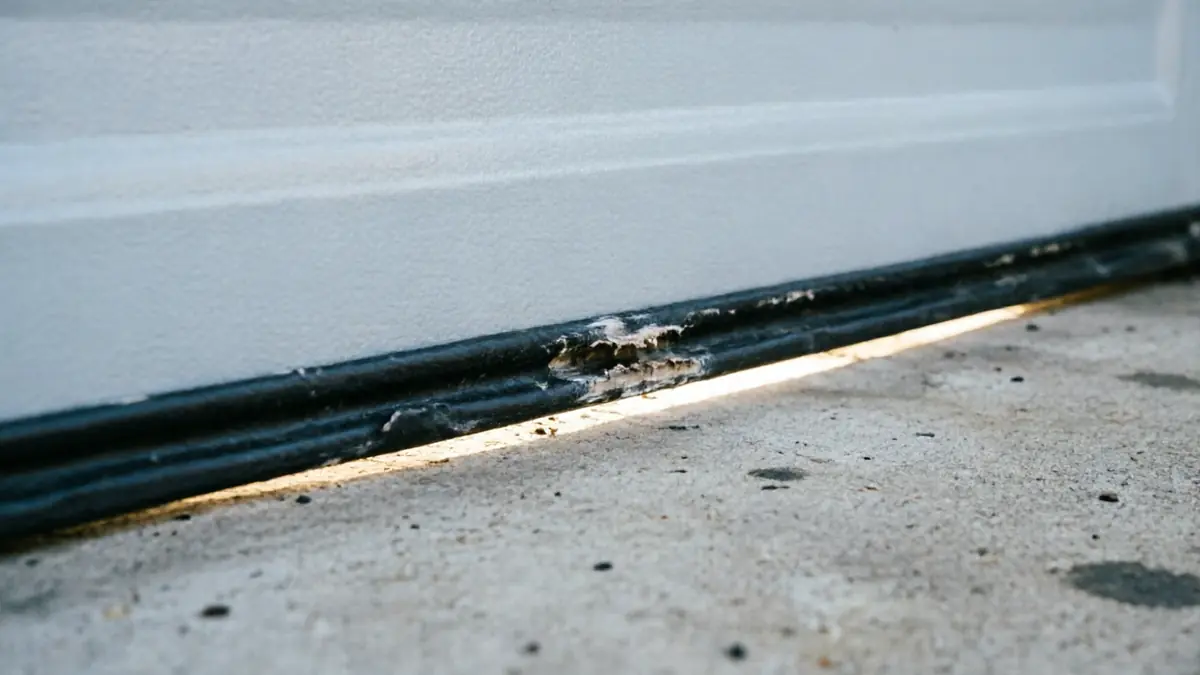
Why Wide Doors Take the Worst of It Here
Bowie's double-wide garage doors date mostly to the 1960s-70s building boom, before factory wind struts were standard.
Read guide
What 1960s and 70s Construction Means for Your Garage Door in Bowie
Many Bowie homes date to the 1960s and 70s, before garage door insulation standards existed.
Read guide
When an Older Bowie Garage Door Is Worth Fixing - and When It Isn't
Bowie homes were built between 1948 and 2014, mostly in the 1960s and 70s, which means a lot of original garage door hardware still in use today.
Read guideReady when you are
Need a garage door sorted in Bowie?
Bowie Garage Door Pros repairs and installs garage doors, springs and openers in Bowie, MD and the surrounding area.