Blog
Why Wide Doors Take the Worst of It Here
Bowie's double-wide garage doors date mostly to the 1960s-70s building boom, before factory wind struts were standard. Here's what that means for your door and when to call.
When to Call Someone
If a double-wide door has ever bowed outward in the middle during a gust, even an inch, stop opening and closing it until someone looks at it. A door that flexes under wind load is telling you the horizontal bracing isn't doing its job anymore, and running it on the opener in that state usually turns a $200 strut repair into a full panel replacement.
Call right away if you hear the door popping or cracking against the frame in wind, if a section has visibly separated from the track, or if the bottom panel won't seat flush against the slab anymore. Those are structural symptoms, not cosmetic ones.
You don't need to call for ordinary wind noise - a little whistle at the weatherstrip on a gusty day is normal and not a sign of failure. Save the call for flex, popping, or visible gaps. If you're not sure which one you're hearing, a phone description is usually enough for us to tell you whether it can wait.
The Situation
Most of the houses in this service area went up between 1948 and 2014, with a median build year of 1977 and the bulk of the stock dating to the 1960s and 70s across the 91 named communities here. That era is exactly when the 16-foot double-wide garage door became the standard choice on new construction - it's cheaper to frame one wide opening than two single bays, and builders ran with it.
The problem is that wind-load bracing for garage doors wasn't a routine factory feature yet. A single-car door is narrow enough that its own panel steel resists bowing. A 16-foot door has a lot more unsupported span in the middle, and without a horizontal strut running the width of the top one or two sections, that span is the weak point. On an older double-wide door with no retrofit, the center of the top panel is doing more flexing than the engineer who built it in 1968 ever accounted for.
This isn't a defect, it's just the age of the hardware meeting a wider opening than it was built to handle long-term.
How Local Conditions Play In
This area sits in a climate band rated cold and severe, which matters here for a reason that has nothing to do with wind directly: steel contracts in cold weather, and a strut or track bracket that's already stressed from decades of flex has less give left when the metal tightens up on a cold morning. A double-wide door that's been bowing slightly every windy day since the Carter administration is more likely to crack a weld or pop a hinge in January than in July.
Across 457,002 households and 185,075 owner-occupied houses in this service area, a meaningful share of the double-wide doors still in daily use predate any factory wind-strut standard, since the dominant construction era here is the 1960s and 70s. That's not a guess about any one house - it's the math of what was built when, in a region where the bulk of the stock is that old.
With a median household income of $119,439 across this area, retrofitting a strut kit or stepping up to a factory-reinforced door is within reach for most owners here when the math says it's time.
Checking It Yourself
Stand inside the garage with the door closed and look at the top one or two sections from below. If there's a horizontal bar of heavier gauge steel running the full width, bolted at both ends to the track hardware, you've already got a strut and the door is braced for width. If there's nothing there but the plain panel, that's your 1970s double-wide running on its original, unreinforced top section.
Next, on a breezy day, watch the middle of the door from inside while it's closed. Any visible bow toward you in the center, even slight, means the span is flexing more than it should. A straight line that stays straight is fine.
Check the end hinges and the track brackets closest to the center for hairline cracks or rust at the weld points - that's usually where decades of flex shows up first, not in the panel steel itself.
One honest limit here: a visual check from the garage floor can catch an obvious bow or a missing strut, but it won't tell you the exact wind rating of your door or whether the track anchors are still torqued to spec. That part takes a hands-on inspection.
Questions
Common questions
Why does my double-wide door flex more than my neighbor's single door?
A double-wide door spans roughly 16 feet, almost twice the width of a single-car door, so the top panel has a lot more unsupported steel in the middle. Without a horizontal strut bracing that span, it's going to flex under wind pressure in a way a narrower door simply doesn't. Older doors from this area's dominant 1960s-70s building era often shipped without one.
Can I add a strut to an old door instead of replacing it?
Often, yes - a horizontal strut kit bolts to the back of the top section and ties into the existing track hardware, and it's a lot cheaper than a new door. Whether it's worth doing depends on the condition of the panel steel and hinges underneath it, which is worth a look before you decide.
Does the cold make a wind-related problem worse?
It can. This area sits in a cold, severe climate band, and steel that's already stressed from years of flexing has less tolerance left once it contracts in winter temperatures. A hinge or weld that's been quietly weakening all summer is more likely to actually fail on a cold morning.
Is a whistling sound the same thing as a structural problem?
No. A light whistle at the weatherstrip on a windy day is just air moving past a seal and isn't a sign of damage. A structural problem looks and sounds different - visible bowing in the panel, popping or cracking noises against the frame, or a section that's pulled away from the track.
Recommendation
You Might Also Like
More garage door guides for Bowie homeowners.
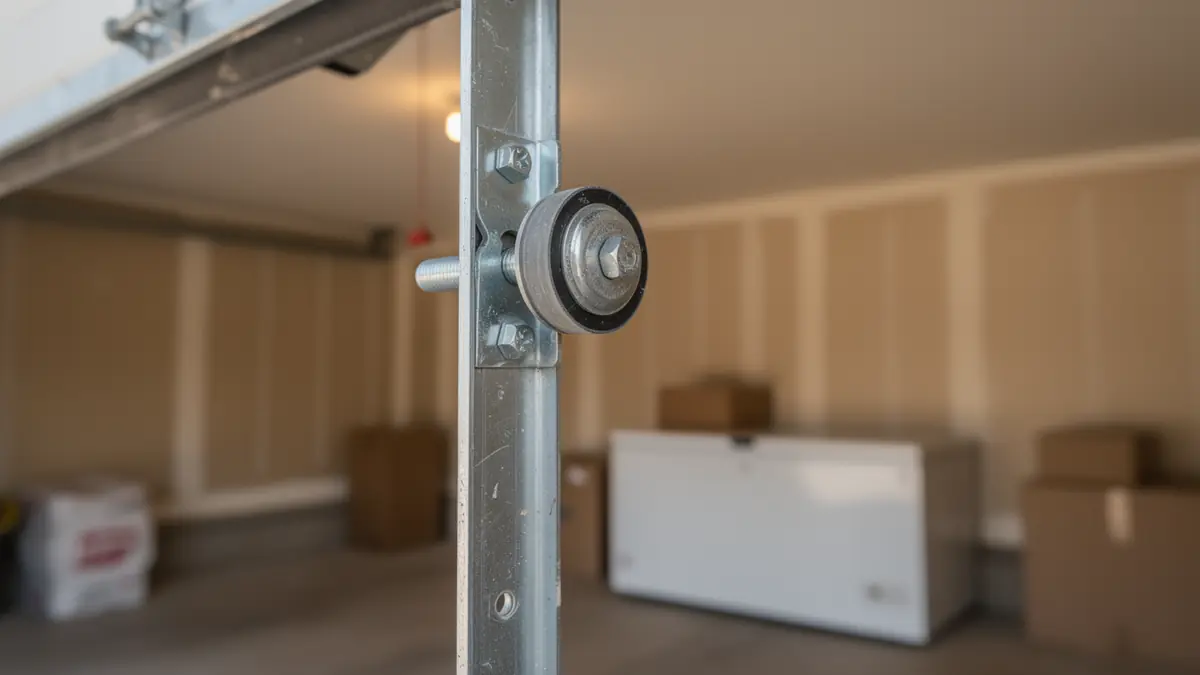
What That Garage Door Noise Is Actually Telling You
Most Bowie houses date to the 1960s-70s boom, and original hardware tells on itself through sound.
Read guide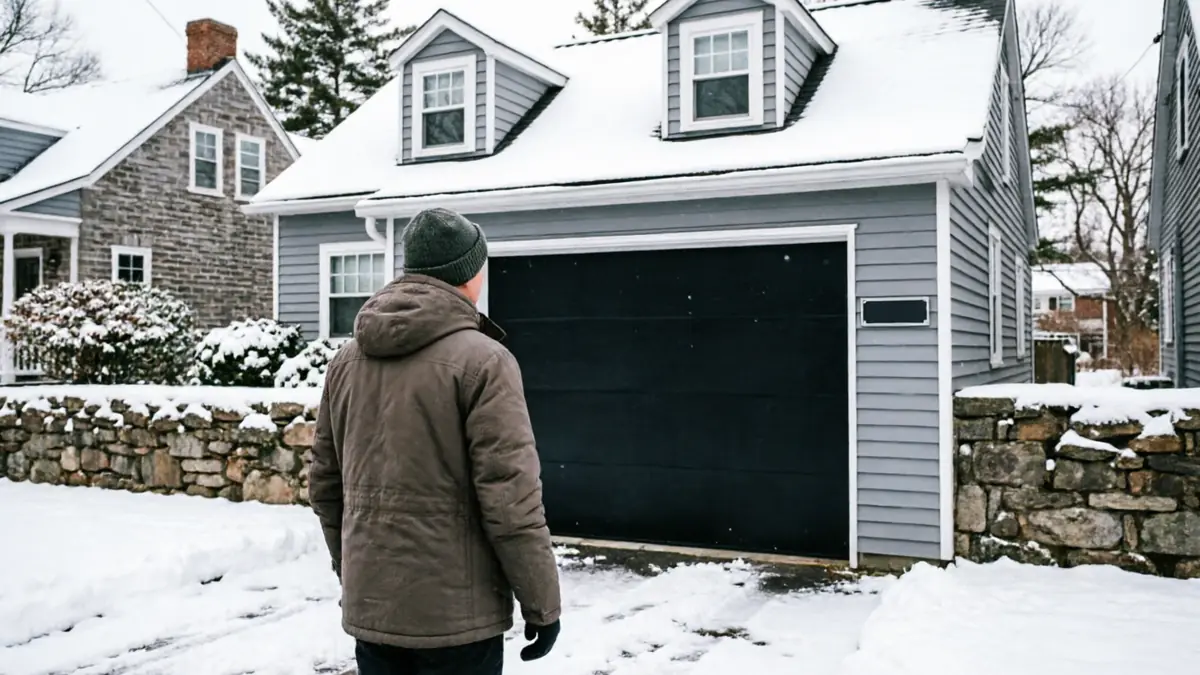
What 1960s and 70s Construction Means for Your Garage Door in Bowie
Many Bowie homes date to the 1960s and 70s, before garage door insulation standards existed.
Read guide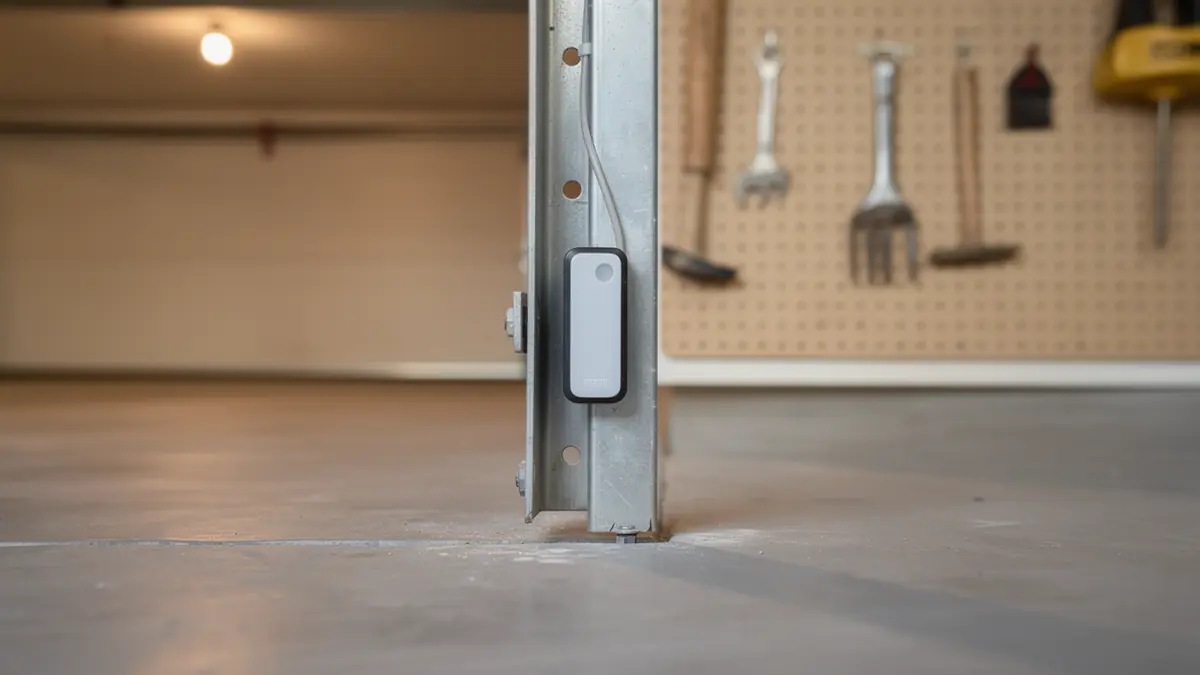
When an Older Bowie Garage Door Is Worth Fixing - and When It Isn't
Bowie homes were built between 1948 and 2014, mostly in the 1960s and 70s, which means a lot of original garage door hardware still in use today.
Read guideReady when you are
Need a garage door sorted in Bowie?
Bowie Garage Door Pros repairs and installs garage doors, springs and openers in Bowie, MD and the surrounding area.