Insulated sections for openings
That means we stock insulated steel sections sized for the common 16x7 and 9x7 openings framed during that era, along with torsion springs rated for the heavier double-layer doors homeowners are upgrading to now.
Bowie, MD
Replacing a worn garage door in Bowie means matching the opening to a house built decades ago and a winter that still gets cold enough to matter. Here's what that job involves.
On the truck
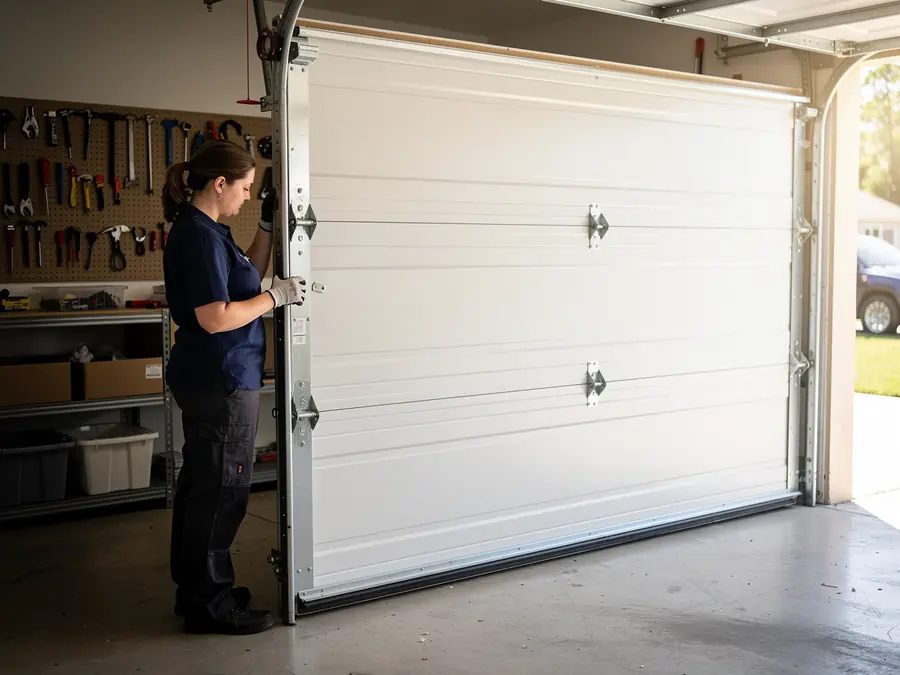
Most of the doors we pull out in Bowie are builder-grade steel or wood from a house that went up sometime between the late 1940s and the mid 2010s, with the bulk of that stock dating to the 1960s and 70s.
That means we stock insulated steel sections sized for the common 16x7 and 9x7 openings framed during that era, along with torsion springs rated for the heavier double-layer doors homeowners are upgrading to now.
We carry openers with cold-rated drive motors, since a door sitting in an unheated bay through a hard Bowie winter needs an opener that doesn't bind up when the grease stiffens.
We don't carry every custom panel width off the truck - a nonstandard opening from an older remodel sometimes means a short order wait on the exact size, and we'll tell you that up front instead of quoting a date we can't hit. Track hardware comes in both low-headroom and standard-lift versions, because a lot of these older garages were framed before anyone thought about accommodating a modern opener's clearance needs.
Local causes
A door built when the median Bowie home went up - around 1977 - was never designed with insulation in mind. It was a single layer of steel or a few panels of wood, fine for the building codes of the time, bad for a climate that sits in the cold-severe band and puts that door through real freeze-thaw cycling every winter. Across the 91 named areas that make up this part of the stock, from Fairwood to Mitchellville to Glenn Dale, houses from the same construction wave are hitting the same wall at the same time: steel skins that have rusted through at the bottom panel, wood doors that have swollen and cracked, and tracks that were never plumbed to handle a heavier insulated replacement. This isn't a Bowie-specific defect so much as Bowie's housing math catching up with it - a 1960s-70s door has a shelf life, and a lot of them are past it at once.
The repair
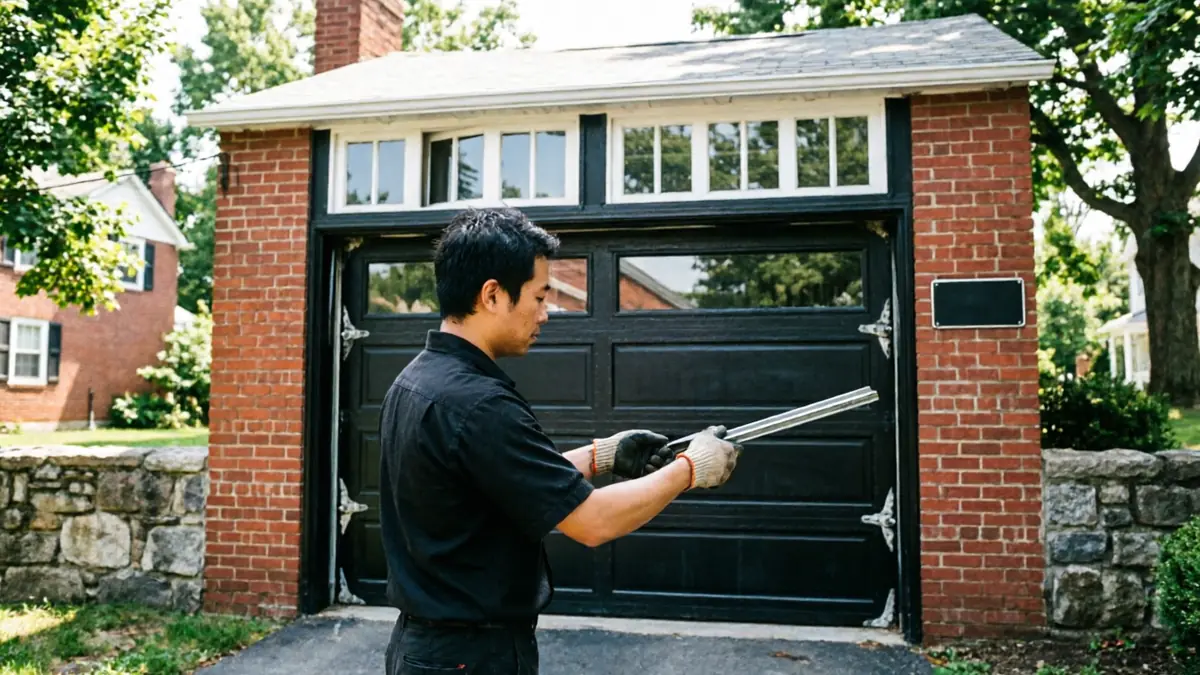
Installation starts with measuring the actual opening, not the door you're replacing - framing on a house from this era has often shifted a little over fifty-plus years, and the new door has to be shimmed to true regardless of what the old jamb looks like.
We pull the old track and springs rather than reuse them; mixing new panel weight with old hardware is how you get a door that slams shut on a worn cable.
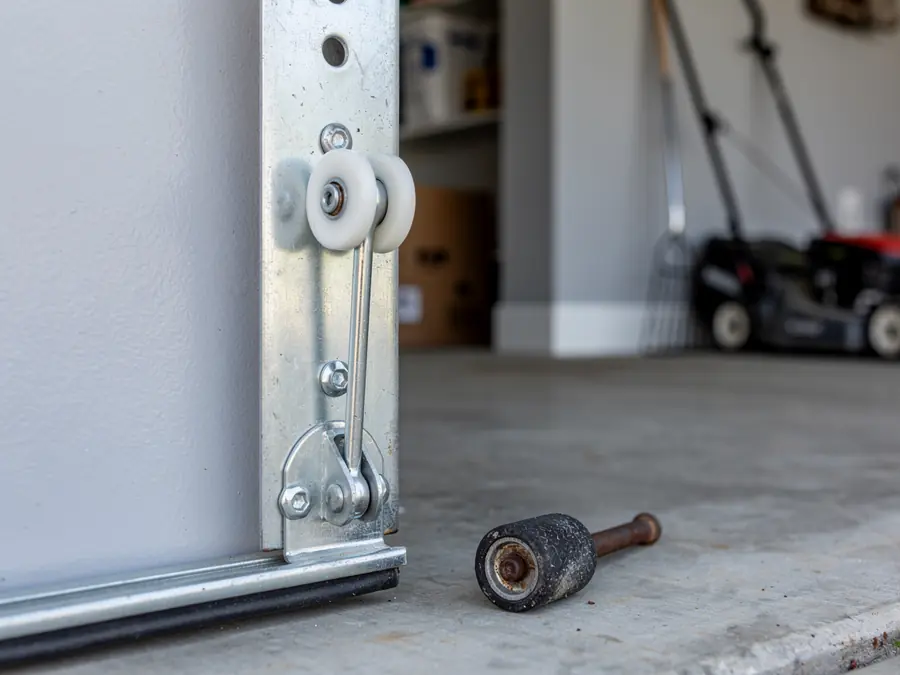
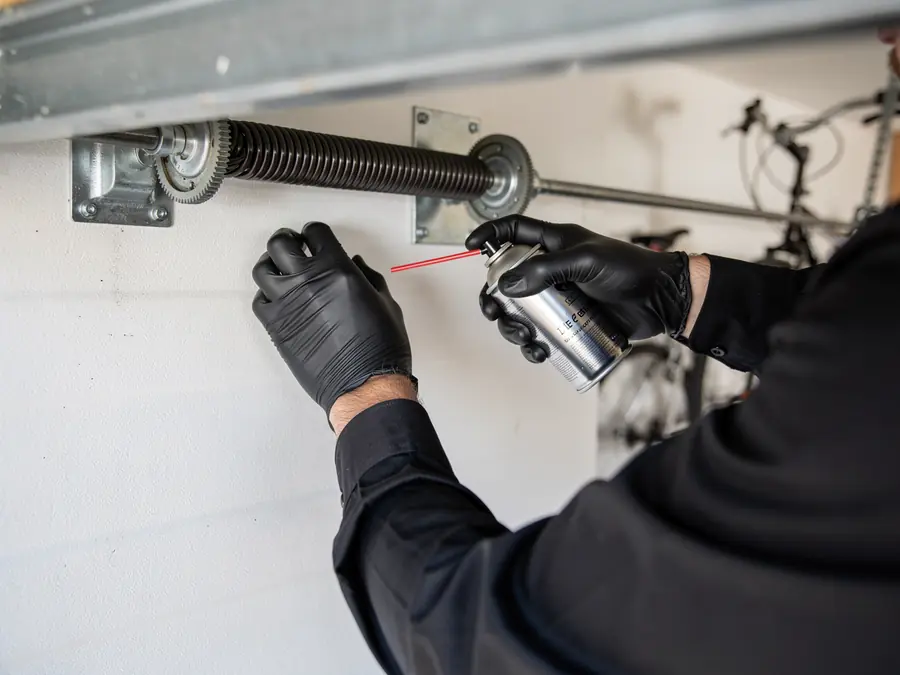
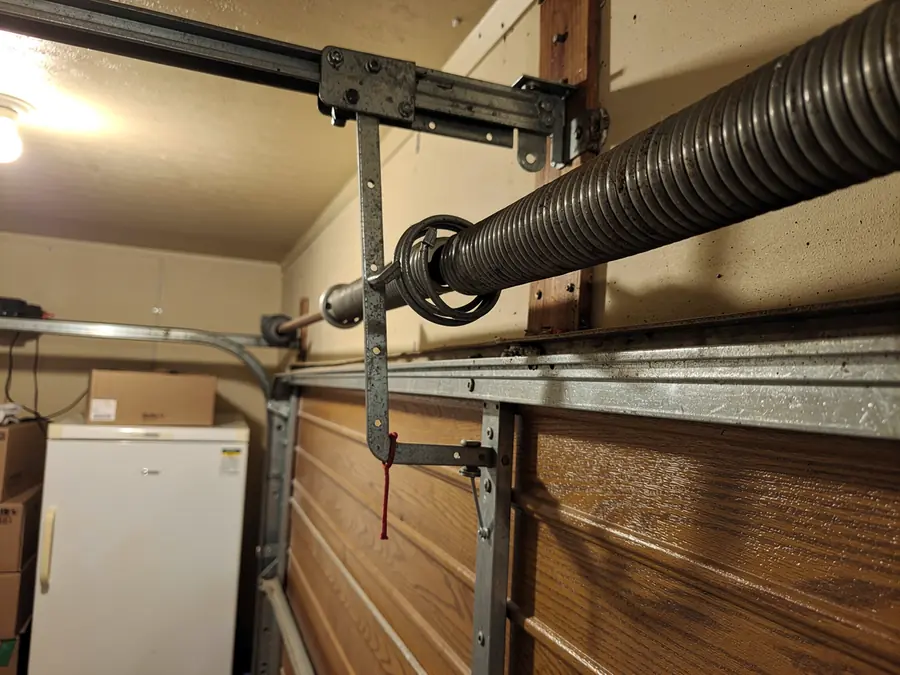
For an insulated replacement, that usually means new torsion springs sized to the heavier door, new rollers, and in some cases new track if the low-headroom clearance in an older garage won't fit a standard drum.
The opener gets remounted and reprogrammed rather than just bolted to a new door. If the framing around the opening is rotted or out of square, that's carpentry work before the door goes in, and we'll say so rather than hang a door on a bad frame.
Symptoms
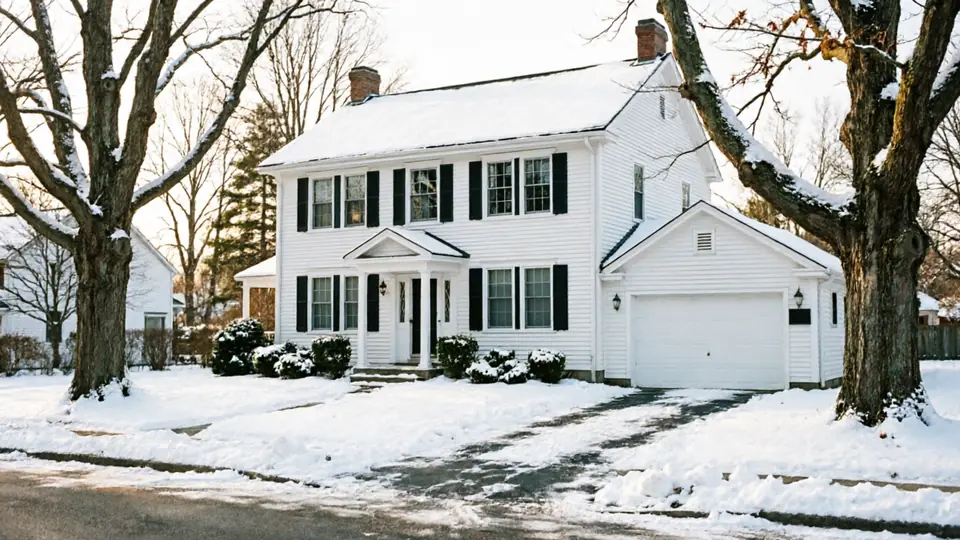
You notice it gradually: the door seems heavier to lift by hand, daylight shows along one bottom corner, the opener strains and reverses partway through closing, or the heating bill creeps up because an uninsulated panel is basically a steel sheet between your garage and a cold-severe winter. On a lot of Bowie houses from the 1960s-70s wave, these symptoms show up together, because the door and the original opener are aging out at the same pace. A door that still opens and closes but looks rough isn't automatically a replacement job - sometimes new weatherstripping and a spring adjustment buy it several more years. Full replacement makes sense once the panels themselves are failing structurally, not just cosmetically.
Questions
If the panels are rusted through, cracked, or no longer sit flush in the track, repair won't fix that - it's a structural issue. If the door opens fine but looks worn or the weatherstripping has failed, that's often a cheaper fix. We'll look at the actual panel condition before recommending replacement.
Cold temperatures stiffen the lubricant in the rollers and hinges, and older torsion springs lose tension over time, so the opener has to work harder to lift the same door. In a cold-severe climate band like this one, that effect is more noticeable than it would be somewhere milder.
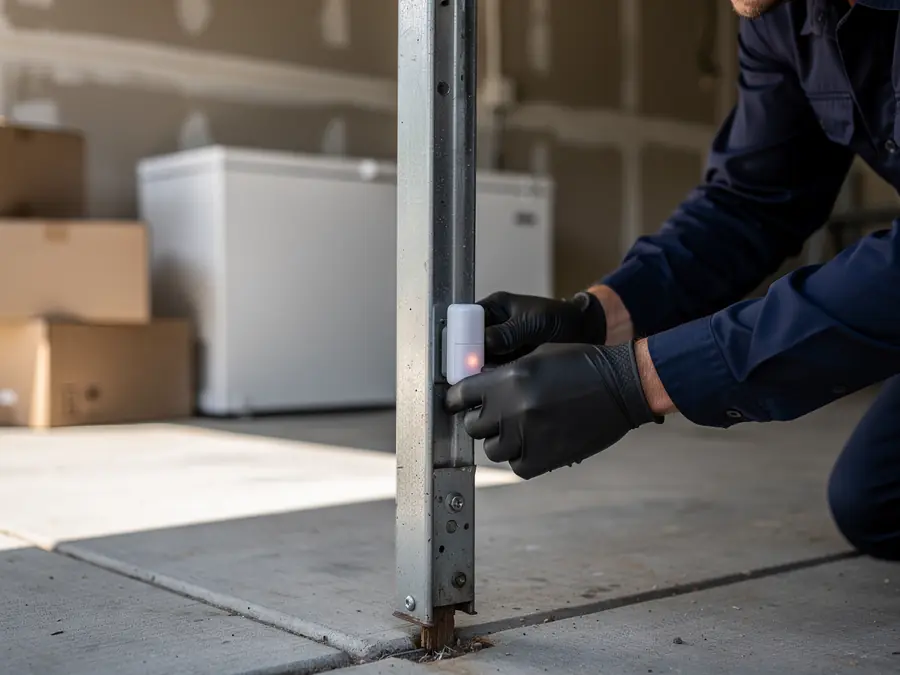
Sometimes, but a heavier insulated door usually needs a spring upgrade at minimum, and older openers from houses built decades ago may not have the lift capacity or safety sensors current code expects. We check the opener's rated weight against the new door before installing.
No. Standard 16x7 and 9x7 openings common in this area's 1960s-70s housing stock, yes. A custom width from an older remodel sometimes has to be special ordered, and we'll tell you that before you commit rather than after.
Explore more
Ready when you are
Bowie Garage Door Pros repairs and installs garage doors, springs and openers in Bowie, MD and the surrounding area.