Winding without proper bars
Unwinding or winding a torsion spring without the right bars is the single most common ER-trip cause tied to this kind of repair, and it's not worth the risk to save a service call.
Mitchellville, Bowie
Mitchellville homes went up mostly after 1989, meaning steel sectional doors on torsion springs. Bowie Garage Door Pros travels the 4 miles to fix them fast.
The repair
Most houses in Mitchellville were built around 1989, which puts the garage stock here a full generation past the older torsion-spring boxes we see on the Bowie side of the service area.
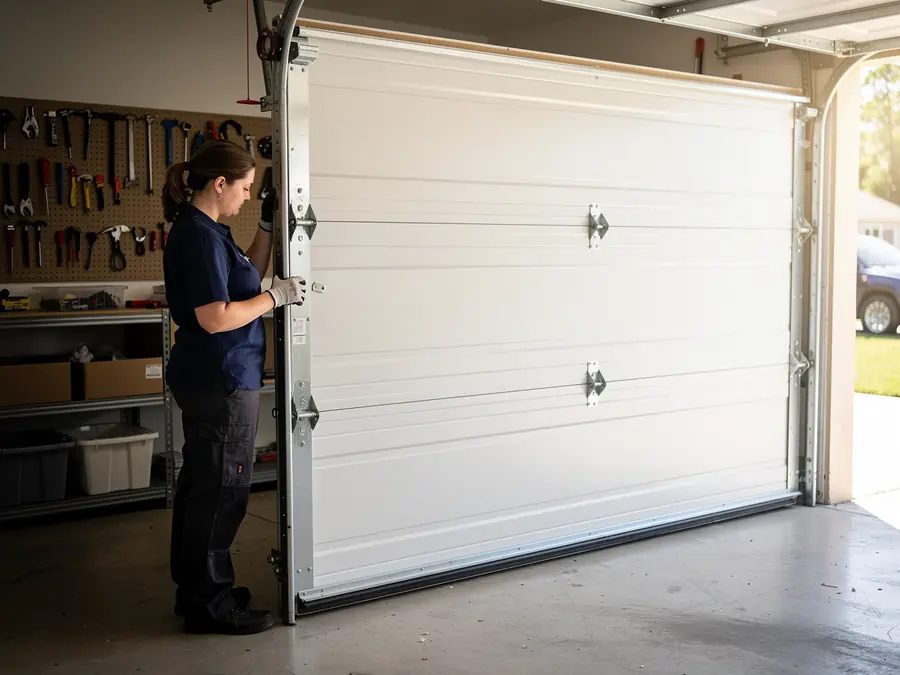
That later build date means steel sectional doors, usually in the 16-foot double-wide openings that became standard in subdivisions from that period, hung on torsion springs rather than the extension-spring setups common on older stock. The panels are thin-gauge steel with a foam core, which is fine until a cold snap makes the foam brittle at the seams or a bent track pulls a panel loose from its hinge.
When one of these doors fails, it's almost always one of three things: a torsion spring that's lost tension and won't lift the weight anymore, a cable that's frayed off the drum, or an opener that's stripped its gear trying to force a door that's already binding on a bent track.
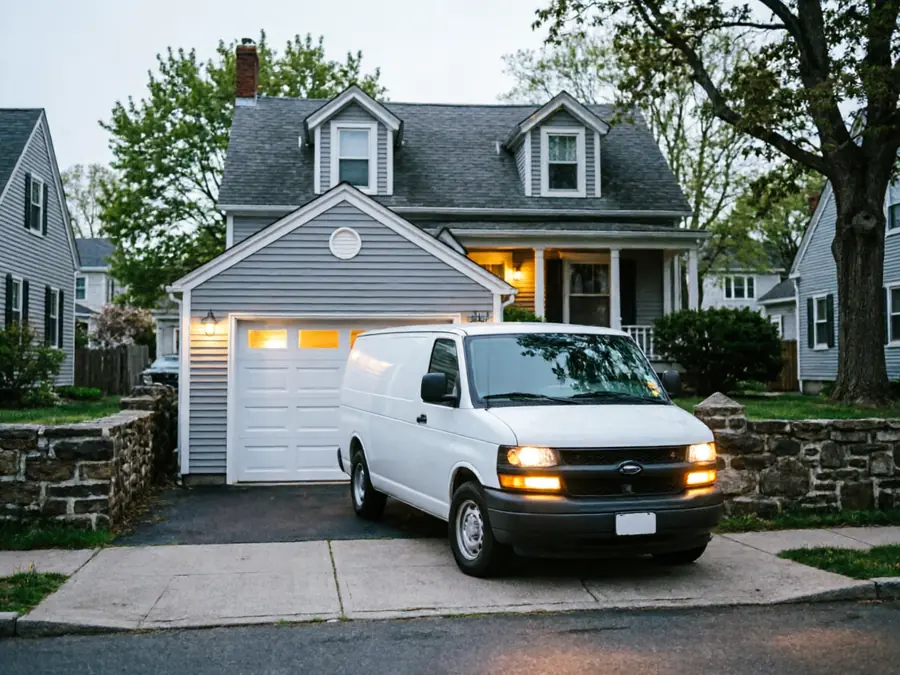
We get a call, we load the truck in Bowie, and we're on the road - it's a 4-mile run, not a dispatch zone we're guessing at. Cold-weather failures matter more here than they would somewhere milder.
This area sits in a cold-climate band with real winter severity, and steel doors contract in low temperatures just enough to put extra load on a spring that was already marginal. That's usually the week it lets go.
DIY or pro
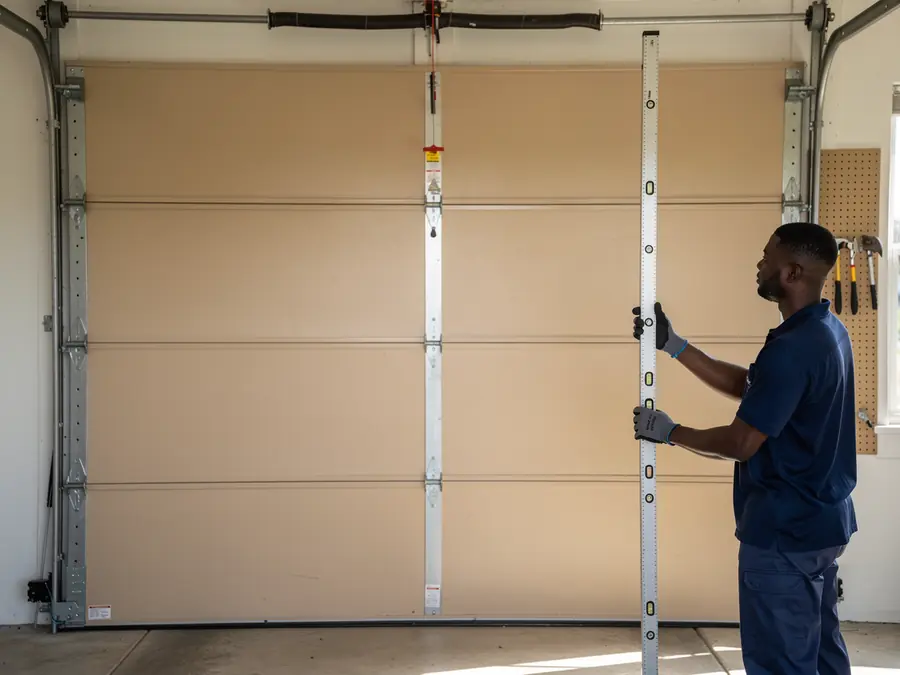
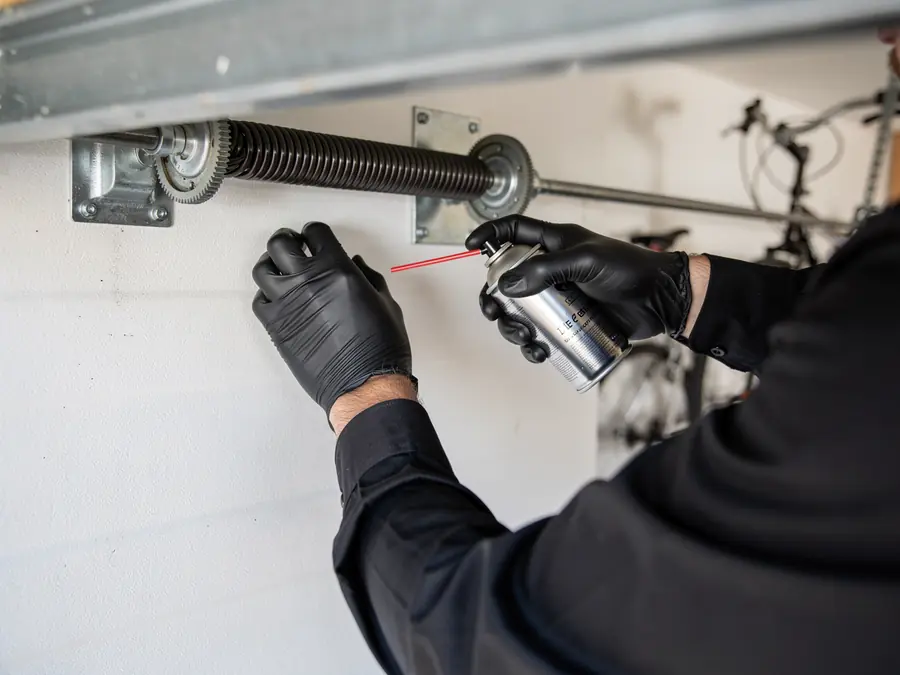
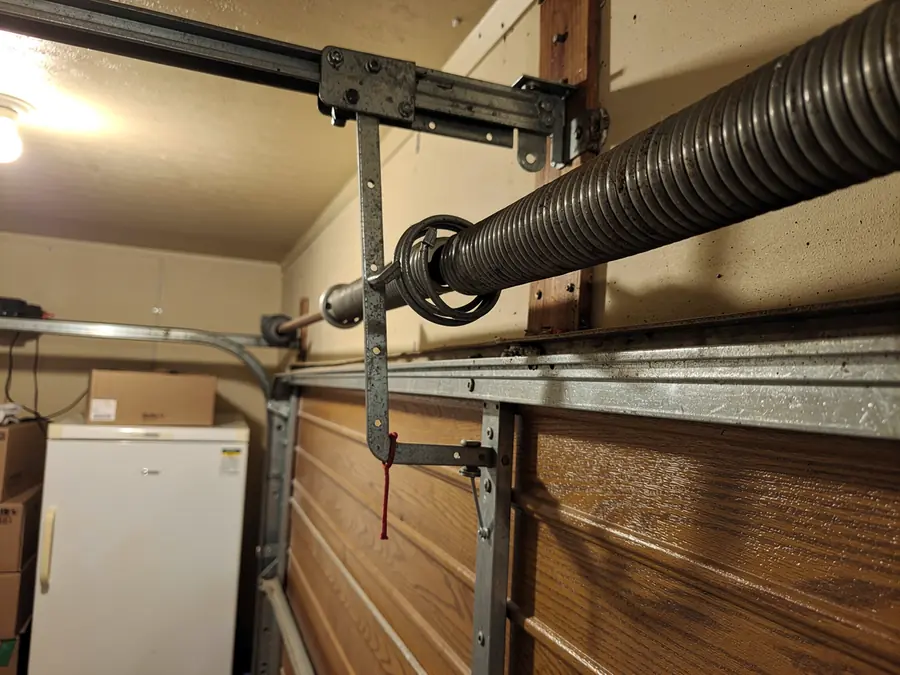
A torsion spring under tension can break a hand or worse, and we won't talk anyone through replacing one over the phone - that's not false modesty, it's the one job on a garage door we tell every homeowner to leave alone.
Unwinding or winding a torsion spring without the right bars is the single most common ER-trip cause tied to this kind of repair, and it's not worth the risk to save a service call.
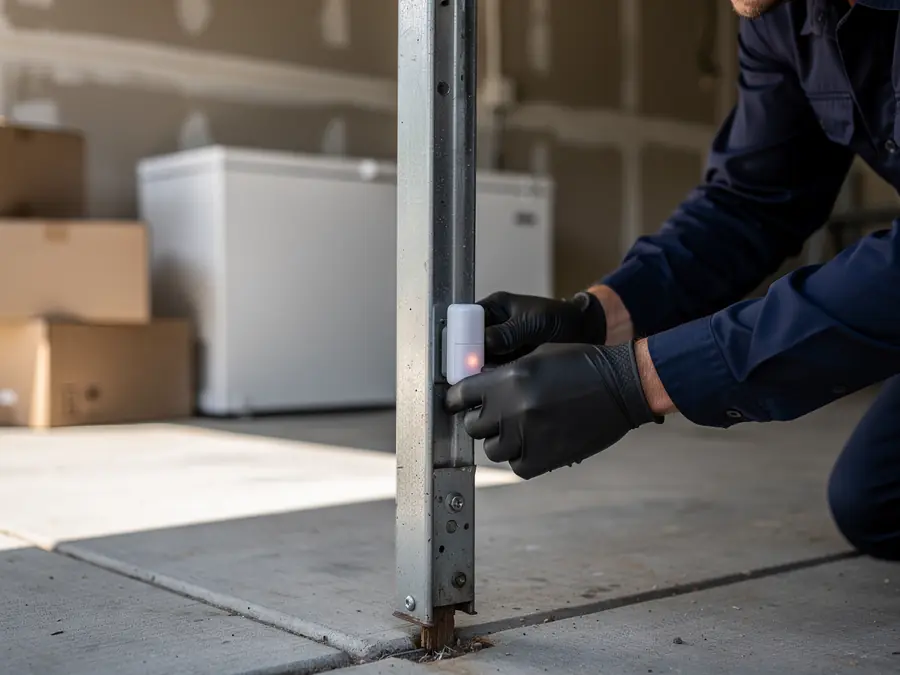
What you can safely check yourself: whether the opener's sensors are aligned and clean, whether the track has visible debris or a bent section near a hinge, and whether the door is binding only on one side (a sign of a broken cable, not a dead opener). If the door won't budge and you hear a loud bang before it stopped moving, that's almost always the spring - don't force it with the opener, you'll burn out the motor.
Household incomes in this part of the service area run well above the regional median, and we mention that only because it tends to mean owners replace rather than patch when a door's hardware is clearly mismatched to a newer opener. If your door is original to a 1989-era build, the spring and drum hardware on it may not match anything a big-box store carries - that's a parts question, not a labor one.
On the truck
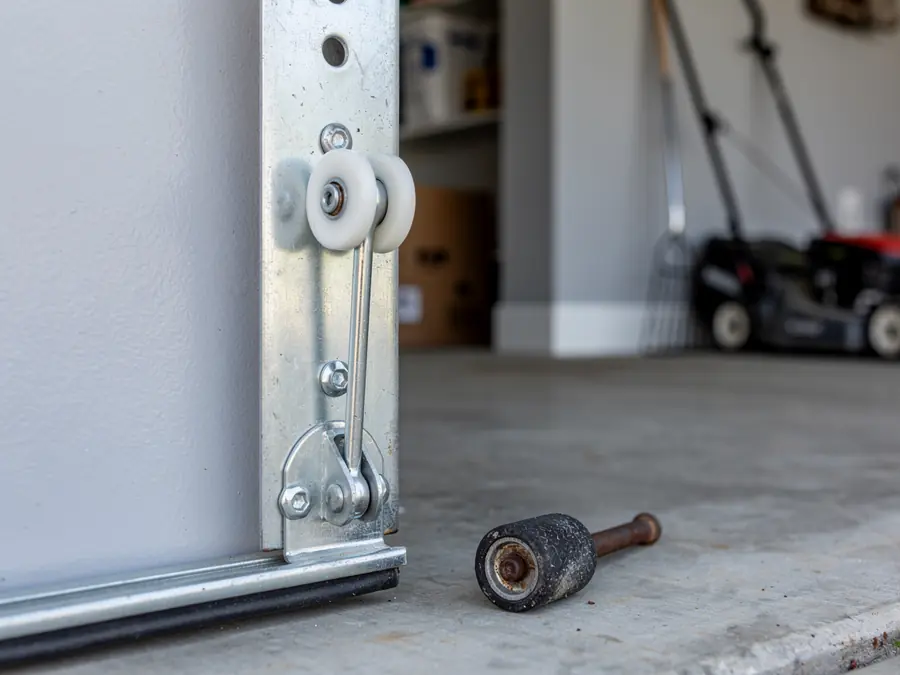
For the double-wide steel sectional doors common on 1989-and-later builds, we carry torsion springs sized for 16-foot openings, standard-lift cable sets, and the nylon rollers that replace the original steel ones most of these doors shipped with. Steel rollers on a 30-plus-year-old door are usually the first thing making noise, and they're a cheap swap compared to a spring.
We also stock the common opener drive gears and logic boards for the chain and belt-drive units that were standard equipment in this build era, since a worn gear is often what a homeowner mistakes for a dead opener when the door itself is fine.
Here's the limitation: if a door uses a spring size or a drum that fell out of production - which does happen on some builder-grade doors from this period - that part isn't on the truck and isn't a same-day fix. We'll tell you straight if that's the case rather than jury-rig something that'll fail again in six months. Full replacement is sometimes the honest answer, not a repair.
Booking
We run emergency repair out to Mitchellville from our Bowie base, about 4 miles down the road, so there's no local branch to call - just the one number and the one truck schedule.
Tell us the door's symptom (won't open, opens partway, loud bang then stop) and roughly how old the door is, since that tells us which spring and roller stock to load before we leave the shop.
If you're not sure whether it's an emergency - the door is stuck shut but the car's not trapped inside, say - it's worth a same-day call anyway. A spring under partial tension or a cable hanging by a few strands can fail completely with no warning, and that's a worse problem to have at 7pm on a weeknight than it is at 10am.
For the full list of what we handle beyond emergency calls, see our Mitchellville service page; for how this fits into the Bowie-based emergency line generally, that page covers the broader area.
Questions
We dispatch from Bowie, about 4 miles away. We don't quote a fixed response time here since we don't have a local branch - we send the truck as soon as we take the call, same as any other address in our service radius.
Torsion springs are rated for a set number of open-close cycles, and cold weather adds extra load on steel doors like the ones common in Mitchellville's 1989-era builds. The spring doesn't weaken gradually that you'd notice - it holds until it doesn't.
No. A torsion spring under tension can cause serious injury if it releases while you're working on it. We don't walk homeowners through this one over the phone - it's the one repair on this list that's a call every time.
Usually yes for springs, cables, and rollers sized to the standard 16-foot double openings common in this build era. Some builder-grade doors used spring sizes that are now out of production, and in that case replacement may be the faster fix.
Explore more
Ready when you are
Bowie Garage Door Pros repairs and installs garage doors, springs and openers in Bowie, MD and the surrounding area.